How to make a shared family craft box easy to tidy
· Editorial team houstonnewsdaily24.com
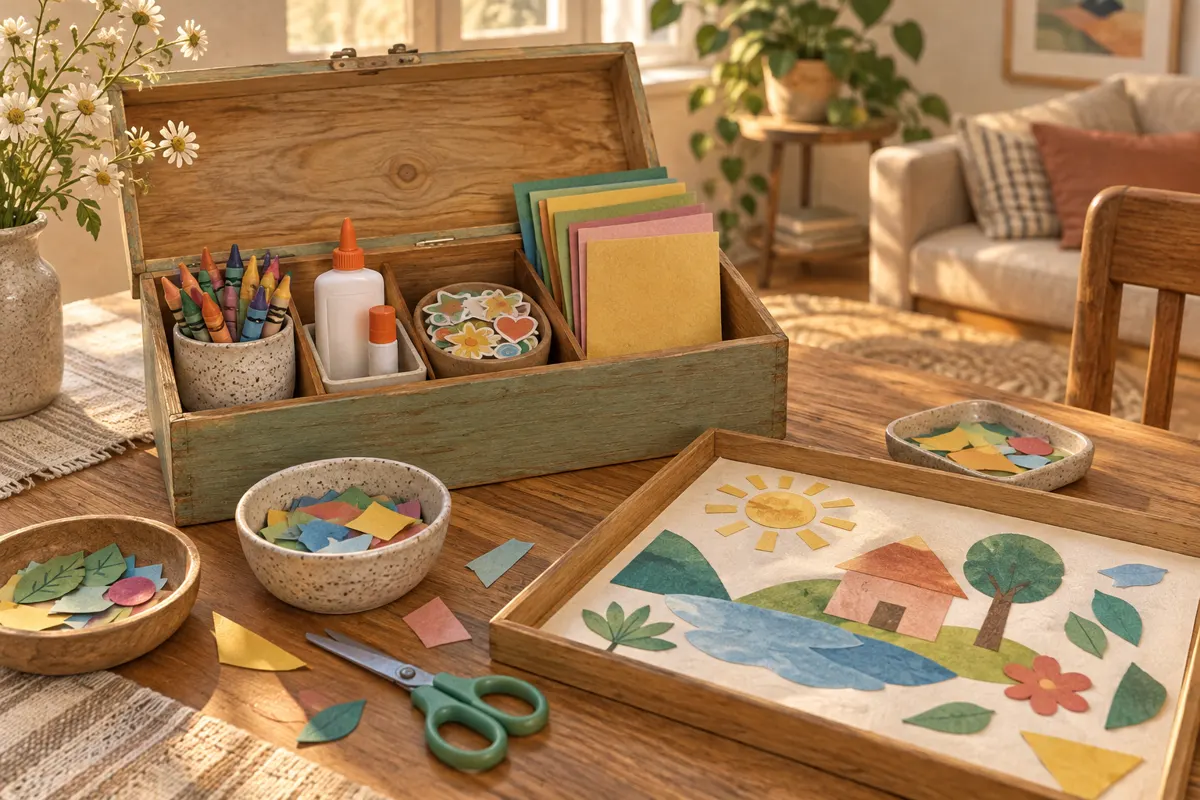
Make a shared family craft box easy to tidy by giving each supply a clear home, keeping unfinished projects separate, and teaching children the same short cleanup sequence. Start with containers you already own and store the box near the table where your family usually crafts. The aim is for everyone to know where things go without needing an adult to sort every handful.
Sort the supplies before choosing containers
Gather craft supplies from drawers, bags, and shelves in one place. Invite children to help group them by use: drawing, paper, sticking, painting, and making. Seeing everything together lets you judge how much storage each category needs before buying anything.
- Keep supplies your family uses and materials children have a specific plan for.
- Remove dried-out markers, empty glue sticks, and unusable scraps.
- Set aside usable extras to donate or keep as refills outside the everyday box.
- Keep complete activity kits together when separating their pieces would make them harder to use.
Use the box’s capacity as a practical boundary. If children must press down on the contents to close it, reduce the everyday selection. A refill container can hold spare supplies without crowding the materials needed for an ordinary craft session.
Give each category a simple, labeled home
Choose sturdy containers that fit inside the main box and are easy for children to lift out. Reuse suitable tubs or small boxes first. Clear containers make contents visible; opaque ones can work with obvious labels. Check that children can open and close any lids without help.
A proposed starter layout is one container for drawing tools, one for glue and tape, one for stickers and decorative pieces, and a flat folder for paper. Adjust those categories to the supplies you actually own. Avoid dividing materials so finely that returning them becomes a sorting exercise.
Use short labels such as “Crayons,” “Glue,” and “Paper.” Add a simple picture for children who do not yet read. Place labels where they remain visible when the containers are packed. Store materials that require adult supervision separately, out of children’s reach.
Separate shared supplies from unfinished projects
An unfinished collage should not have to compete with the crayons for space. Our proposal is to give each child a named folder, shallow tray, or small project box beside the shared supplies. Flat work can go in a folder; dimensional projects need a tray or another suitable space.
- Return shared tools to the craft box when a session ends, even if the project continues.
- Keep pieces made for a particular project with that project.
- Leave wet paint or glue in an agreed drying spot before storing the work.
- When a project space fills up, ask its owner what to finish, display, keep, or dismantle.
This proposed arrangement gives children a way to protect their work while keeping the shared box available to everyone. If a child has personal supplies, give those a clearly named container too, so the family knows which materials are shared.
Teach one cleanup sequence everyone can follow
Keep the box near the usual craft surface, with a consistent storage spot. Show children how each container fits inside it, then practice putting supplies away together. A proposed cleanup routine is to follow these steps at the end of every session:
- Move unfinished work to its project space or drying spot.
- Put caps on markers and close glue containers.
- Return supplies to their labeled containers.
- Put reusable paper scraps in the paper folder and discard unusable bits.
- Clean the work surface, pack the containers, and return the box to its storage spot.
Give younger children one concrete task, such as collecting crayons, while an adult handles jobs they cannot yet manage. If something repeatedly lands in the wrong container, check whether its label or location is confusing before adding another rule.
Refresh the box when it becomes hard to use
Check the contents before adding new supplies. Replace what is running low, remove items that no longer work, and ask children about materials they have stopped choosing. If your collection is large, keep some activities elsewhere and rotate them into the everyday selection.
Treat recurring mess as a clue to adjust the setup. An overflowing scrap folder may need a smaller selection; a buried glue tub may need a more accessible position. Make one change at a time, then see whether children can find and return the supplies more easily.