How to arrange a small entryway so wet shoes can dry neatly
· Editorial team houstonnewsdaily24.com
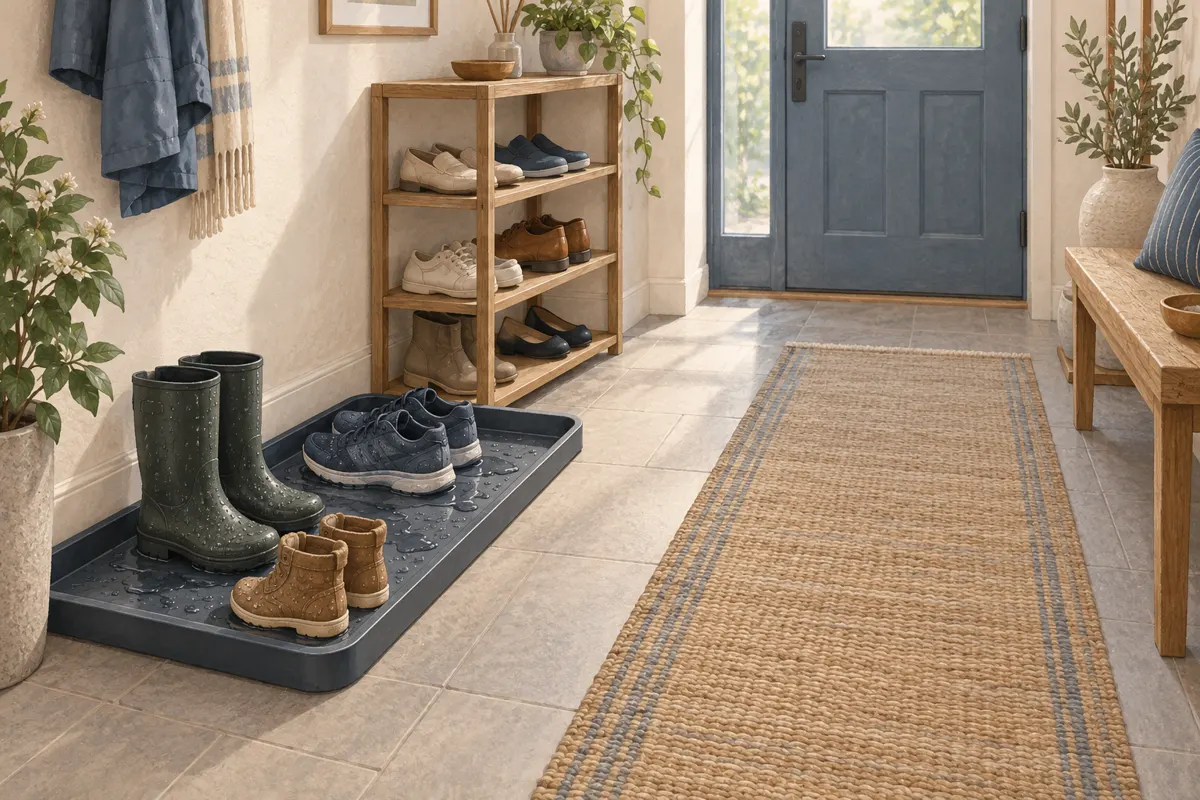
Put wet shoes on a washable tray near the door, leave space between pairs, and move them into separate storage once they are dry. In a small entryway, a clearly defined drying spot keeps damp footwear from becoming a pile across the floor. The layout and routine below are editorial proposals you can adapt to your entrance.
Choose a drying spot outside the walking path
Start by opening the entrance door fully and walking through the space with a bag in hand. Look for a patch of floor beside the door or along a wall where shoes will be easy to remove without blocking the route inside. Check nearby closet doors, too: a tray that fits when everything is closed may become awkward during daily use.
Our proposed starting layout is one wet shoe tray beside one compact place for dry footwear. If you already have a bench, try the tray beneath its open end, provided shoes remain accessible and have room around them. Avoid squeezing it into a tightly enclosed compartment just to hide the mess.
Use a tray you can empty and wash easily
A shoe tray gives wet or muddy pairs a defined landing place and catches moisture and dirt. Choose its footprint around the shoes that actually arrive home together. A tray large enough for occasional overflow may take up too much of a narrow entrance every other day.
- A washable surface that you can wipe or rinse according to its care instructions.
- A raised edge to contain drips while the tray sits level.
- Enough space for your largest everyday shoes without toes hanging over the edge.
- A shape you can lift and carry comfortably when it needs emptying.
Keep cleaning access in mind. A tray wedged behind furniture is harder to maintain than one you can slide out easily. If you add a removable insert, check that you can clean underneath it; hidden water and grit still need attention.
Give wet shoes space while they dry
Arrange wet footwear in a single layer with gaps between shoes. Stacking pairs saves floor space temporarily, but leaves damp surfaces pressed together. Keep the drying area open to the room rather than immediately closing wet shoes inside a cabinet, lidded basket, or storage bench.
- Remove wet shoes at the tray so drips stay within the landing area.
- Loosen laces and open tongues where the shoe design allows.
- Remove insoles only if they are designed to come out, and follow the footwear maker’s drying instructions.
- Separate the shoes and empty any standing water from the tray.
- Check that the shoes and removable parts are dry before putting them away.
Avoid setting a fixed drying deadline for every pair. Materials and how thoroughly the shoes got soaked will differ. If you need footwear again soon, keep a dry alternative available rather than clearing the tray before the wet pair is ready.
Store dry pairs above or beside the tray
Slim cabinets, under-bench storage, closet shelves, and over-the-door organizers are options for keeping everyday shoes within reach. Using vertical space and moving rarely worn pairs elsewhere can reduce the number competing for entryway floor space.
For a narrow entrance, our proposal is a shallow dry shoe cabinet beside the tray. Where a bench already fits, use its shelf or baskets for dry pairs. In an entrance with a coat closet, place dry footwear on a shelf or door organizer and leave the wet landing spot outside.
Keep only the pairs you regularly use near the door. Give each person a consistent shelf or basket position so putting shoes away requires little thought. Leave muddy pairs on the tray until they are dry and cleaned.
Reset the space before the tray overflows
Make moving dry shoes off the tray part of your daily routine. After wet arrivals, check for pooled water and wipe up anything that escaped onto the floor. Periodically lift the tray to clean underneath it, then clean and dry the tray before replacing it.
A weekly reset can help control entryway clutter. Return misplaced pairs to their storage spots and remove shoes that are no longer in regular use. If the drying tray repeatedly fills up, first check whether dry shoes are lingering there. If several wet pairs genuinely arrive together, our proposal is a second washable tray in another suitable spot, clear of household traffic.